

Otter
I waddled onto the beach and stole found a computer to use.
🍁⚕️ 💽
Note: I’m moderating a handful of communities in more of a caretaker role. If you want to take one on, send me a message and I’ll share more info :)
- 209 Posts
- 869 Comments
Joined 2 years ago
Cake day: June 5th, 2023
You are not logged in. If you use a Fediverse account that is able to follow users, you can follow this user.

There is also !localllama@sh.itjust.works :)
crossposting between the communities can help grow both
 6·10 days ago
Being able to compare between options would help me pick which one I want to use :)
Alternatively, a way to filter the full list would be helpful. That way I can select the items that I need and see everything that has what I need.
This for example:
It would be cool if there was a table to compare them with, since right now you’d have to open each of them to check.
Thank you for putting it together though!
You can add an image to the thumbnail field to get the best of both options :)
 6·11 days ago
Especially if no bank account is attached and if it isn’t tied to anything on here
@mesamunefire@piefed.social does anything show up when you log in to GitHub and check billing?
 4·17 days ago
Check your local libraries, or search for maker spaces
For example
 17·17 days ago
The visitor, in this case, was a white-eared opossum — a marsupial native to the region. Evidently, he’d wandered into the daycare center from the surrounding forest and found a perfectly cozy spot to rest his head.
Neat
 5·18 days ago
Organic Maps was on iOS, my guess is that it’ll take time to get a new app approved on the iOS store

Since the PieFed API was only enabled recently, there aren’t that many apps out yet. !interstellar@kbin.earth is the one that people recommend right now. Voyager has plans to add it.
As more people use it, hopefully more apps will support it :)

Someone else already gave a decent explanation :)
Can you try these two guide pages and see if they help? They have some diagrams
https://fedecan.ca/en/guide/get-started
https://fedecan.ca/en/guide/lemmy/for-users/detailed-overview
So lemmy.ca and piefed.ca have different feeds altogether when I view them, are they two separate things then
They are two separate platforms, made by different teams. The feeds look different for a few reasons
- piefed.ca is brand new and so it is missing a lot of the content. As people start using it, the default logged out feed will start to look closer to other instances
- An instance only pulls the content that its users are subscribed to. When you make an account on an instance and you are the first person to subscribe to a community, hitting subscribe will tell your instance to start pulling in those posts. That is why every instance will be slightly different regardless.
I’m not really clear on how communicating freely between them works
Unlike Lemmy and Mastodon, which are somewhat different formats (posts in communities) vs. short text posts on a user’s profile), Lemmy and PieFed are more or less the same. So it should be a lot closer in experience. Whatever you can subscribe to, comment on, or vote on within lemmy.ca, you should be able to do the same on piefed.ca
Especially because we are running both instances, and so they will have similar block lists.
It’s nice timing! Looking forward to seeing you and your instance in the world of pie :)

 771·1 month ago
I believe Waymo has a better set of sensors (Lidar + Radar+ Cameras instead of just cameras), more processing power, and more research / time / resources spent on it compared to Tesla.
So it’s not that we aren’t ready for self driving taxis, but rather about which cars are ready to provide that service
 4·1 month ago
It could be so that it works for embedded videos on other websites
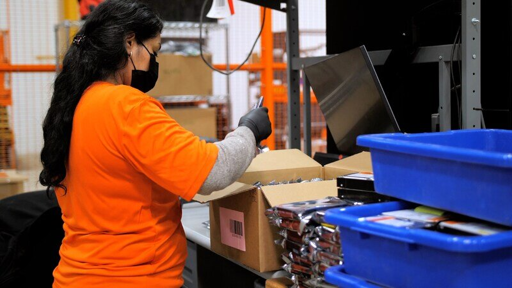
A big part of this site’s pitch to its clients, including the “hyperscale” customers with gigantic data centers nearby, is that each device is labeled, tracked, and inventoried for its drives—both obvious and hidden—and is either securely wiped or destroyed. The process, commonly called ITAD, is used by larger businesses, especially when they upgrade fleets of servers or workers’ devices. ITAD providers ensure all the old gear is wiped clean, then resold, repurposed, recycled, or destroyed.
 3·1 month ago
How do people use the feature? Since I can’t think of a case where I would use this, aside from a child wanting to buy something without the parent needing to put their credit card details on the kid’s device
It might be easier to make a few images with some anti-AI patterns, and then give them randomly generated file names and paths. If needed, you could do some subtle transformations each time but generating a new image each time might be more effort than its worth
We haven’t hugged the Wii to death yet
Here is a list
https://selfh.st/apps/?tag=Bookmarks
Karakeep (formerly Hoarder) is another popular one, although I haven’t tried it yet
I saw this on another post earlier: https://www.theverge.com/tech/672312/microsoft-block-palestine-gaza-email









I think they’re looking for local “AI” anyway. Since those work directly on your machine, there’s no concern around trust (nothing leaves your device) and the resource cost is whatever your hardware uses, or was already using.
There are some concerns still with local models, such as any biases in the training data that was used, but for image classification it wouldn’t be that bad.