I am not sure about how this phenomenon works in context of the warp drive where space-time itself is warped around the ship, but in universes with more conventional FTL mechanics where objects are contradictory to special relativity just accelerated to speeds beyond the speed of light, yes, aerodynamics do actually kinda come into play again.
Space isn’t really a vacuum, it just is empty enough ao that we can mostly treat it like one. But space still contains a lot of particles, dust or debris for example, that with higher speeds, there is something very similar to an air reaistance, drag and all that.
However, there may be other factors that can be more important for a space craft design. If you are into absolutely overthinkinh such things, I can recommend Isaac Arthur on Youtube.
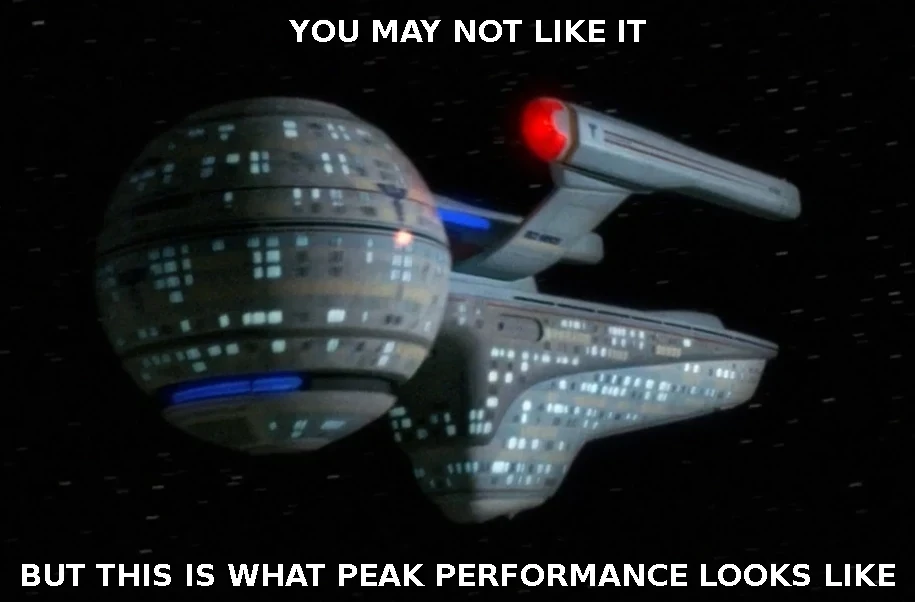
The deflectors primary purpose is to push dust and junk away from the hull and to some extent into the brussards and you can make that basically any shape and size for that matter.

I am not sure about how this phenomenon works in context of the warp drive where space-time itself is warped around the ship, but in universes with more conventional FTL mechanics where objects are contradictory to special relativity just accelerated to speeds beyond the speed of light, yes, aerodynamics do actually kinda come into play again.
Space isn’t really a vacuum, it just is empty enough ao that we can mostly treat it like one. But space still contains a lot of particles, dust or debris for example, that with higher speeds, there is something very similar to an air reaistance, drag and all that.
However, there may be other factors that can be more important for a space craft design. If you are into absolutely overthinkinh such things, I can recommend Isaac Arthur on Youtube.
The deflectors primary purpose is to push dust and junk away from the hull and to some extent into the brussards and you can make that basically any shape and size for that matter.